

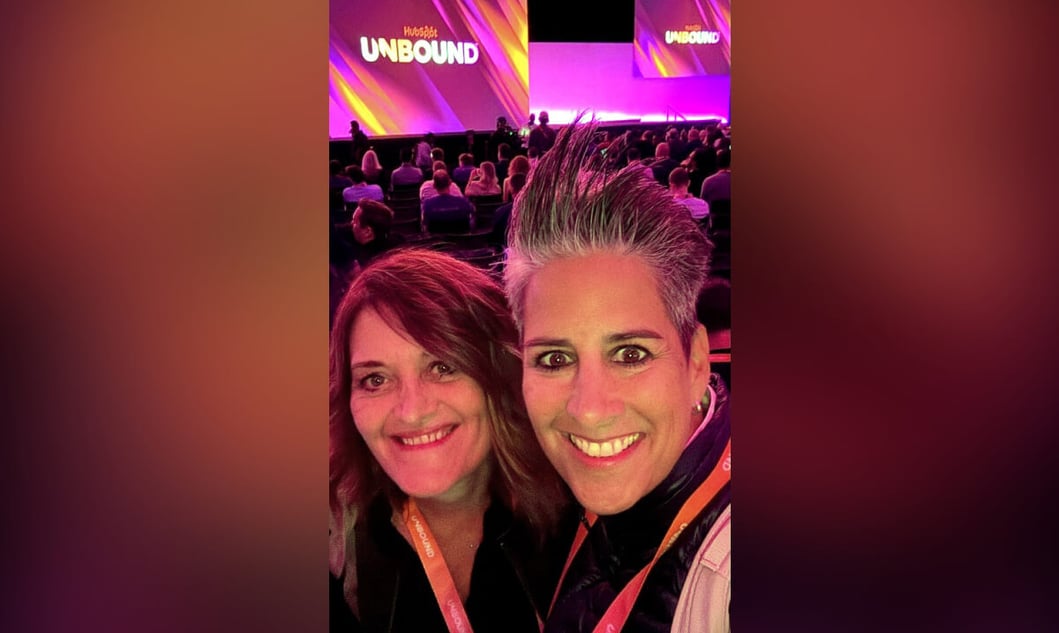
I am writing this article directly from UNBOUND 2026 in Boston. One particularly fascinating presentation offered many valuable insights that deserve further reflection and sharing.
Why Is “Use AI” Not a Strategy?
Because a tool alone does not change business outcomes. Cole summed it up in one sentence: “AI adoption is a behavior change problem in a technology costume.” AI implementation may look like a technology project, but in reality, it is about changing the way people work.
Cole distinguishes between three questions. Which tool are we using? Which process does it change? And do people know how to work with it? Most companies invest almost all their energy in the first question. However, the real business impact comes from the second and third.
There is also a practical reason to adopt a tool-agnostic approach. Today's AI tools will be significantly better in six or twelve months. Building a strategy around a specific model or feature is like building on sand. Companies that build their strategies around business outcomes and processes can replace tools without having to start from scratch.
What Does “Access Is Not Adoption” Mean?
Access to AI is now standard, but consistent use is not. In Boston, Cole presented figures from Blanchard's research. More than 80 percent of employees have access to AI tools at work, but only just over a third use them daily.
Another figure is even more revealing. Almost 60 percent hide their AI use, at least to some extent. In the everyday context of a Swiss SME, this means that a salesperson uses ChatGPT to draft quotations but never mentions it in a meeting. A marketing specialist has created a prompt that generates product descriptions in half the time but keeps it to herself. Meanwhile, the official AI licences paid for by the company remain largely unused. The most effective AI work happens behind the scenes, often through private accounts, without data protection guidelines, and no one else on the team can learn from it. This gap between access and adoption comes at a triple cost: paid but unused tools, uncontrolled data flows, and knowledge that remains with individuals instead of becoming standard practice.
Why do people hide something that makes their work better? I found Cole's answer to this question the most powerful part of the presentation. Adoption requires trust on several levels simultaneously. Can I trust the system? Is its output accurate? Can I trust the rules? Do I know which tools and data are permitted? Can I trust my organisation? What does AI mean for my role? If even one of these questions remains unanswered, uncertainty arises. And people who feel uncertain experiment quietly or not at all. Unclear rules are therefore more than just a compliance risk; they directly hinder AI adoption.
The biggest unanswered question often lies with senior management itself, without them even realising it. According to the figures presented by Cole, 87 percent of leaders believe they set a good example when it comes to using AI. However, only 54 percent of employees perceive it that way. Leaders who encourage AI use but never demonstrate how they use it themselves or how they recognise a good result send mixed signals. Officially, AI is encouraged, but in practice, it remains unclear whether using it is seen as a skill or a shortcut. It is precisely in this grey area that hidden AI use emerges. In a Blanchard survey, 43 percent of respondents reported problematic AI-related behaviours in their daily work, ranging from quietly judging colleagues to using AI in secret. Researchers describe this pattern as an “AI Shadow Culture.” They explicitly warn against allowing it to become normalised, because once something becomes a habit, it is difficult to correct.

How Do You Get Started the Right Way? Start with the Business Outcome, Not the Tool
AI creates value when it causes an employee to do something differently than before. Cole puts it this way: “AI only creates value when it changes the next action.” An AI system that accurately summarises every sales conversation sounds useful. But if the summary remains unread in the CRM and the salesperson continues working as before, nothing has changed. Lots of AI, zero impact.
Let’s return to the quotation example. Here, the next action is following up, which currently happens after six weeks or not at all. In the new process, AI automatically prepares a suggested follow-up call on the fifth day after a quotation is sent, including the most important points from the quotation and the customer’s history. The salesperson picks up the phone. “Left unattended” becomes “followed up with a call.” It is this change in action that improves the conversion rate, not the AI itself.
For this to work across the entire team, a second element is needed: a quality standard. Cole experienced firsthand what happens without one in her own organisation. Sales employees were supposed to use AI for follow-ups. Some did an excellent job, while others sent four pages of text that no customer wanted to read. The problem was not the AI; it was the lack of a clear definition of what a good follow-up should look like. How long should it be? What information should it contain? What matters to the customer? Once this standard is established, the salesperson checks each AI-generated draft against it, makes adjustments and sends it. This ensures that the entire team consistently delivers good quality, not just the two best salespeople.
Importantly, Cole is not advocating maximum automation. The process must clearly define where AI is used, where humans make decisions and who is responsible for quality. I noted down her wording on this: “AI did it” is never going to be okay. Responsibility remains with humans. For Swiss companies, data protection is another important consideration. That is why we offer CompanyGPT, a controlled enterprise environment with precisely these safeguards built in.
Through enablement, not rollout. Distributing a licence is easy; changing behaviour is a leadership responsibility. Cole links this to Situational Leadership. People are at different stages of development when taking on new tasks and therefore need different levels of guidance and support. Someone new to AI needs more specific instructions than an experienced user. Meet people where they are.
The benefits of this approach are measurable. Gallup found that employees who clearly perceive support from their managers are twice as likely to use AI regularly.
I particularly like one of Cole's tips because it can be implemented immediately. In most organisations, 5 to 8 percent of employees are true high performers who often cannot explain why they are so good at what they do. Observe these people. How do they organise their day? How do they manage a sales opportunity? How do they use AI? Their behaviour becomes the starting point for establishing better standards across the entire team. We explain how an organisation can systematically develop this capability in our whitepaper on the In-house Marketing & Sales AI Factory.
What Else Did I Take Away from Boston?
Far more than can fit into a single article. If you would like to know which trends, insights and ideas from UNBOUND 2026 are relevant to your company, I warmly invite you to join us in Biel for a pain au chocolat and a coffee. Send me an email with two or three suggested dates. I look forward to exchanging ideas with you.
Inspired greetings from Boston,
Andrea B. Roch
