Skip to content

Customer Journey Mapping: Using Systematic Customer Feedback to Strengthen Customer Loyalty

Most companies know surprisingly little about how their customers actually experience working with them.

An IDC white paper commissioned by Emplifi (2022) quantifies this gap. While 87 per cent of the companies surveyed consider their customer experience to be excellent, only 11 per cent of customers agree. Bain & Company found an almost identical ratio in 2005, which means this perception gap has persisted for two decades. For executive management, it is more than a cosmetic issue: companies that do not know what retains customers and what frustrates them cannot manage customer loyalty effectively. The gap can be closed through customer journey mapping combined with systematic customer feedback at the right touchpoints.

Companies that understand their customers’ journey know where trust is built and where business or trust is lost. This article explains how to get started and how to turn feedback into tangible improvements.

Customer Journey Mapping: Using Systematic Customer Feedback to Strengthen Customer Loyalty
16:26

b4you-customer-journey-mapping-1200x700-komp

Key Takeaways


  • Customer journey mapping visualises the phases a lead or customer goes through with your company, from the first interaction through to contract renewal.

  • Feedback is systematically collected at defined points in the journey, for example after an offer has been accepted or rejected, during and after onboarding, after completed projects or support tickets, and after the first three months.

  • Feedback leads to concrete service and process improvements rather than unused collections of data.

  • Companies that actively collect feedback during the customer relationship know what matters to customers and where problems exist before contract renewal. This allows them to enter renewal discussions with the right arguments and resolve issues beforehand.

  • The entire cycle can be implemented in the CRM using automation and with minimal manual effort. This article illustrates the process using HubSpot as an example.


What Is Customer Journey Mapping?

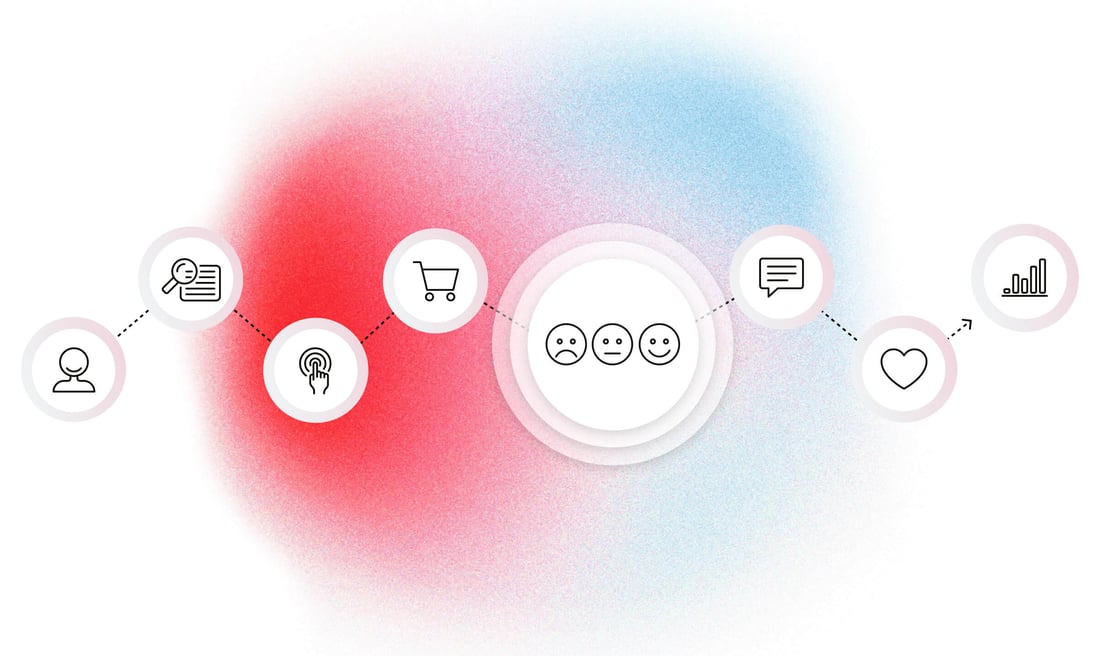
Customer journey mapping is the structured representation of all the phases a customer goes through with your company. The result is a map containing clearly defined stages, the corresponding touchpoints and the expectations customers have during each phase.

For a mid-sized B2B company, a typical journey looks like this:

  • 1.
    Awareness and evaluation.

    The potential customer conducts research, compares providers and makes contact.

  • 2.
    Offer and decision.

    The customer receives an offer, negotiates and either accepts or rejects it.

  • 3.
    Onboarding.

    The collaboration begins, and systems and processes are set up.

  • 4.
    Use and support.

    This the day-to-day collaboration and usually the longest phase.

  • 5.
    Renewal or expansion.

    The contract is due for renewal, and additional services are considered.

The main challenge lies less in drawing the map than in segmentation. A new customer in the first quarter has different needs from an existing customer in their fifth year. A customer with a maintenance contract experiences your company differently from a project customer. Companies that divide their journey according to these segments can later collect more precise feedback and make more targeted improvements.

At Which Points in the Journey Should You Collect Customer Feedback?

Feedback is most effective when collected immediately after a significant moment. Companies that send out one large customer survey each year receive blurred average results. By contrast, companies that ask short, targeted questions at defined trigger points receive responses that can be linked to a specific experience. Five points have proven effective in practice.

After the offer decision, whether accepted or rejected.

A rejection may be even more valuable than acceptance. A machinery manufacturer from the Swiss Plateau consistently asked for feedback after every lost offer and discovered that price was rarely the reason. Longer response times between the initial enquiry and the offer were mentioned more frequently. This insight led to a streamlined offer process that no internal workshop would have uncovered. An acceptance provides the opposite perspective. Companies that know why customers choose them understand their genuine strengths and can highlight these effectively in sales and on their website.

During and after onboarding.

The first few weeks shape the entire customer relationship. Brief feedback collected immediately after the introductory phase shows whether expectations and reality align. If onboarding takes several months, an additional feedback point during the process is worthwhile, for example after the first milestone. This allows you to make corrections while the project is still running instead of only reviewing it at the end.

After the first three months.

By this point, day-to-day operations have begun. The customer can assess whether the collaboration delivers what the sales team promised. Any discrepancies that become visible at this stage are early warning signs, long before they lead to cancellations.

Before contract renewal.

For annual contracts, this should happen around four months before the renewal date. The reason why this the most financially important point is explained below.


→ The questions themselves should be brief. A rating scale supplemented by an open question asking why is sufficient in most cases. Customers appreciate surveys that take no more than two minutes to complete. For key customers, a short personal conversation can replace the survey, but the results should still be recorded in a structured way in the system.

How Can Customer Feedback Be Turned into Tangible Improvements?

Feedback only becomes valuable when it leads to decisions. Three mechanisms ensure that responses result in improvements.

Custom class car8-gradient-red
baloon

First, every piece of feedback needs an owner. Critical feedback following onboarding belongs with the project manager, while comments about availability should go to the service team. Without clear ownership, even the most valuable insight will be lost.

sauberkeitspruefung

Third, customers should be informed about what happened as a result of their feedback. This feedback loop is often forgotten, even though it directly strengthens the relationship. Customers who see that their input has led to change are more likely to provide honest feedback again the future.

icn-prozess

Drittens sollte der Kunde erfahren, was aus seinem Feedback geworden ist. Diese Rückkopplung wird oft vergessen, dabei zahlt sie direkt auf die Beziehung ein. Wer merkt, dass seine Rückmeldung etwas verändert hat, gibt beim nächsten Mal wieder ehrliche Antworten.

Why Is Feedback Before Contract Renewal Particularly Valuable?

The retention process is the most financially powerful lever in the entire journey. Frederick Reichheld of Bain & Company showed in the Harvard Business Review that a five per cent increase in customer retention can increase profits by between 25 and 95 per cent, depending on the industry. Existing customers purchase more, incur lower support costs and are more likely to make referrals.

Despite this, many companies only begin contract renewal discussions when the cancellation deadline is approaching. By then, their negotiating position is weak and their arguments are generic.

A fixed feedback point several months before the renewal date works better — around four months in advance for annual contracts. The customer’s feedback then provides two benefits at once. If the customer is satisfied, you understand which aspects matter most to them and can place these at the centre of the renewal discussion. If there is criticism, enough time remains to resolve the issues before negotiations begin. An IT service provider that follows this approach enters the meeting with answers to the issues that genuinely concerned the customer during the previous year.

→ The PwC study “Future of Customer Experience” demonstrates how quickly customers may otherwise leave. Thirty-two per cent of respondents would stop doing business with a brand they valued after just one bad experience. Companies that regularly monitor how their customers feel can identify these moments early and respond immediately before the customer leaves.

How Can You Implement Journey Feedback in Your CRM?

Systematic journey feedback requires a CRM as its foundation. Triggers, responses and customer data must be stored in one place. Otherwise, feedback remains scattered across isolated survey tools and Excel spreadsheets that no one consolidates. We illustrate how this can be implemented using HubSpot, the platform we work with.

gluehbirne

Imagine a customer accepts your offer in the spring. As soon as the offer is accepted, the deal in HubSpot moves to “closed won”, and the new customer receives two brief questions that same day asking why they chose your company. If the deal had been lost, the same automation would have triggered the rejection survey.

Six weeks later, onboarding is complete. The project status changes and the onboarding survey is sent automatically. The customer gives a good rating but comments that the training session was too brief. The response is stored directly in the customer’s contact record, where the project manager can see it and schedule a second training session.

Three months after the contract starts, the next short survey is sent. This time, the response is critical. The workflow immediately creates a ticket and notifies the responsible key account manager, who calls the customer that same day. A silent frustration becomes a resolved problem.

During the customer relationship, your team completes a larger sub-project for the customer. The brief satisfaction survey sent afterwards receives the highest possible rating. The workflow uses this opportunity to invite the customer to leave a Google review or serve as a reference.

Four months before the renewal date recorded in the CRM, the retention survey is sent. The key account manager reviews the responses before the meeting and knows which services the customer values and where they would like improvements.


No one on the team had to remember any of these dates. This possible because the CRM records each customer’s lifecycle phase, segment, contract start date and renewal date, while also providing standard survey formats for satisfaction, customer effort and likelihood to recommend. For the quarterly evaluation, all responses are available in dashboards organised by journey phase.

Why Is Feedback an Investment in Customer Loyalty?

Every feedback question along the journey is an investment in customer loyalty. According to the Harvard Business Review, acquiring a new customer costs between five and 25 times more than retaining an existing one. Companies that listen before problems escalate need to acquire fewer new customers, renew contracts on better terms and receive more referrals. Satisfied existing customers are the most stable foundation which a mid-sized company can grow.

Customer loyalty is a management priority.

It safeguards revenue, reduces acquisition costs and makes your company less dependent on new business. Customer journey mapping is the simplest instrument for building customer loyalty systematically, and getting started requires less effort than many companies assume. We would be happy to show you in a personal consultation how mid-sized companies have established their customer journeys and feedback points within just a few weeks. 

Your customers have a lot to tell you. The only question is whether anyone is listening.

If you would like to know where listening can deliver the quickest results in your company, schedule 30 minutes with us. After all, listening is our craft.


Frequently Asked Questions About Customer Journey Mapping and Customer Feedback

Which Phases Does a B2B Customer Journey Include?

A typical B2B customer journey consists of five phases: awareness and evaluation, during which the customer conducts research and compares providers; offer and decision; onboarding; use and support as the longest phase; and renewal or expansion. Depending on the business model, these phases may also be divided by customer segment, for example into new and existing customers or contract and project customers.

What Tangible Benefits Does Customer Journey Mapping Offer an SME?

Customer journey mapping shows an SME the points at which customers are won, retained or lost. Based on this information, feedback points, service processes and sales activities can be targeted where they will have the greatest impact. For an upcoming CRM implementation, the mapping also provides the functional blueprint for the phases, segments and automations the system needs to support.

When Should a Company Collect Customer Feedback?

Customer feedback should be collected immediately after significant moments in the customer journey. Effective times include the acceptance or rejection of an offer, completion of onboarding, the first three months of the collaboration, completed projects or support tickets during ongoing operations, and a fixed point several months before contract renewal. Short surveys linked to specific events provide more actionable responses than annual general survey.

How Does Customer Feedback Support Contract Renewals?

Customer feedback collected several months before the renewal date reveals what customers value about the collaboration and where problems exist. Satisfied customers identify the services that matter most to them, allowing these to be highlighted during the renewal discussion. Issues are identified early and can be resolved before negotiations begin, significantly increasing the likelihood of renewal.

Which Survey Types Does HubSpot Support?

In Service Hub, HubSpot supports the three standard feedback formats: CSAT (satisfaction with an experience), CES (the effort perceived by the customer) and NPS (likelihood to recommend), as well as fully customisable surveys. All responses are stored in the contact record and can be sent automatically at the appropriate point in the customer journey using workflows.

How Much Day-to-Day Effort Does Systematic Journey Feedback Require?

Once implemented, systematic journey feedback requires minimal manual effort because automations handle distribution, allocation and the escalation of critical responses. The main investment is the initial concept work: defining the journey phases, segments and trigger points. After that, the work is limited to quarterly evaluations and implementing the resulting improvements.


Sources
  • IDC / Emplifi: White paper on the discrepancy between perceived and experienced customer experience, 2022.

  • Bain & Company: James Allen, Frederick F. Reichheld, Barney Hamilton and Rob Markey, “Closing the Delivery Gap”, 2005.

  • Frederick F. Reichheld / Bain & Company, cited in Harvard Business Review: Amy Gallo, “The Value of Keeping the Right Customers”, 2014.

  • PwC: “Experience is everything: Here’s how to get it right”, Future of Customer Experience Survey 2017/18.

{}